
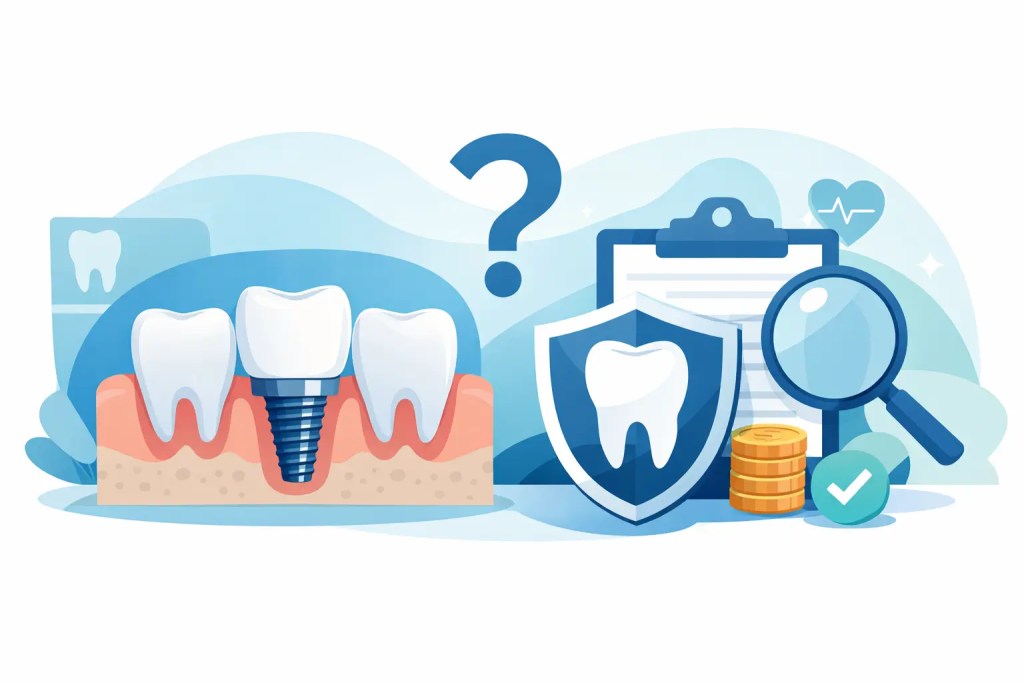
A missing tooth can affect more than your smile. It can change how you eat, speak, and feel in everyday situations. So, are dental implants covered by insurance? Sometimes, but coverage is rarely simple. Many dental plans treat implants as a major service, limit what they pay, or cover only part of the treatment. Before scheduling care, review the plan details and ask for a written estimate of benefits.
Are Dental Implants Covered by Insurance Plans?
Dental implant coverage depends on the specific plan, when you enrolled, why you need the implant, and which parts of the procedure are billed. Some individual and family dental plans cover implants at a percentage after a waiting period. Others exclude them entirely or pay only for a less expensive alternative, such as a bridge or removable denture.
An implant is not one single charge. Treatment may include an exam, X-rays or a CT scan, extraction of a damaged tooth, bone grafting, implant placement, an abutment, and the final crown. A plan may cover one or more of those services while excluding the implant fixture itself. That is why a plan that says it has “implant coverage” is not automatically a promise that it will pay for every stage of treatment.
Dental insurance is designed to help with costs, not necessarily to pay the full bill. Even a plan with implant benefits can leave you responsible for deductibles, coinsurance, charges above the plan allowance, and amounts that exceed the annual maximum.
Common Coverage Rules to Watch
If implants are a covered benefit, a plan may pay a percentage of the allowed amount, often after you satisfy a waiting period. The percentage can vary between the surgical implant and the crown placed on top of it. Your dentist’s office can submit a pre-treatment estimate, sometimes called a pre-determination of benefits, to show how the insurer expects to process the claim.
Many plans also apply frequency limits. For example, a crown may be covered only once within a certain number of years. Some policies have a missing-tooth clause, meaning they will not cover replacement of a tooth lost before the policy became effective. Others require that the treatment be considered dentally necessary under the plan’s rules.
Another key provision is the alternate-benefit clause. If the insurer determines that a bridge or denture is a suitable lower-cost option, it may reimburse only up to what it would have paid for that alternative. You can still choose an implant, but you would pay the difference.
What Your Annual Maximum Means
Most traditional dental insurance plans have an annual maximum, often far lower than the total cost of implant treatment. Once the insurer has paid that maximum amount for covered dental services during the benefit year, additional covered services are generally paid by you until the plan renews.
For example, suppose a plan covers 50% of certain major services but has a $1,500 annual maximum. Even if the implant treatment costs several thousand dollars and qualifies for coverage, the plan’s total payment may stop at $1,500 for the year. If your dentist can safely phase treatment across benefit years, that may help you use benefits in more than one year. Treatment timing should always be based on your dentist’s clinical recommendation, not insurance alone.
Also ask whether the plan has a separate implant maximum, a lifetime limit, or a reduced benefit during the first year. These details can change the value of a plan significantly.
Medical Insurance and Dental Implants
Standard health insurance usually does not cover routine dental implants. Dental care is commonly excluded from medical policies unless it is tied to a covered medical condition, injury, or reconstructive need.
There are exceptions. Medical coverage may be relevant after a serious accident, facial trauma, cancer treatment, congenital condition, or medically necessary jaw reconstruction. Whether medical insurance pays depends on the policy language, diagnosis, treatment setting, and documentation from your medical and dental providers. Do not assume medical coverage applies because an implant has a health-related purpose. Confirm it before treatment begins.
If an accident caused the tooth loss, accidental injury coverage may also be worth reviewing. These policies vary widely, and they are not a substitute for dental insurance, but the event and timing could matter.
Medicare and Implant Coverage
Original Medicare generally does not cover routine dental services, including most dental implants, crowns, cleanings, and dentures. A limited exception may apply when dental services are integral to a covered medical procedure, but that is not the same as routine implant coverage.
Some Medicare Advantage plans include dental benefits. Their allowances, provider networks, waiting periods, and implant rules differ by plan and county. One plan may offer an annual dental allowance that can be used toward implants, while another may exclude implants or cover only selected services. Retirees should compare the dental benefit details rather than relying on a general statement that a Medicare Advantage plan includes dental.
How to Check Your Coverage Before Treatment
A little preparation can prevent expensive surprises. Start by asking your dentist for a written treatment plan with procedure codes and a timeline. The codes allow an insurer or agent to check benefits more accurately than a general question about “implant coverage.”
Then review the plan’s benefit summary and evidence of coverage. Confirm whether implants, abutments, implant crowns, bone grafts, extractions, sedation, and diagnostic imaging are covered. Ask whether there is a waiting period, missing-tooth clause, alternate-benefit provision, deductible, network requirement, or annual maximum.
When you call the insurer, write down the date, representative’s name, and reference number. Ask for a pre-treatment estimate before irreversible work begins. An estimate is not a final guarantee of payment, but it is one of the best ways to understand your likely out-of-pocket cost.
If you are choosing a new dental plan, do not enroll based only on a headline that says “major services covered.” Look at the effective date and whether you need care soon. A lower monthly premium may come with a long waiting period or no implant benefit. A plan with a higher premium may offer better benefits, but only if its annual maximum, network, and exclusions fit your expected treatment.
Questions to Ask When Comparing Dental Plans
Use these questions to keep the comparison focused on your real needs:
- Does the plan specifically cover implant placement, the abutment, and the final crown?
- Is there a waiting period for major services or implants?
- Does a missing-tooth clause apply to my situation?
- What is the annual maximum, and is there a separate implant limit?
- Will my dentist be in network, and what happens if I use an out-of-network provider?
- Does the plan pay based on an alternate benefit such as a bridge or denture?
A dental discount plan is different from dental insurance. It may offer reduced rates with participating dentists, but it does not pay claims or provide the same protections as an insurance policy. For some people facing treatment soon, a discount arrangement and a dentist payment plan may be worth comparing alongside insurance options. The right approach depends on the provider’s fees, the plan terms, and how quickly you need treatment.
Choosing Coverage With the Full Cost in Mind
It is easy to focus on the monthly premium, especially when household budgets are tight. But an implant decision should account for total expected costs: premiums, deductible, copays or coinsurance, annual maximums, network pricing, and services the plan excludes. A policy can be valuable for preventive care and other dental needs even if it pays only a portion of an implant.
If you are unsure which dental plan makes sense for your situation, an agent can help compare available options based on your location, dentist, treatment timeline, and budget. RFM Insurance Solutions can help you review dental plan features in plain language so you can ask better questions before you commit.
The most useful next step is to get your dentist’s treatment plan, verify the benefits in writing, and compare the true out-of-pocket cost before moving forward. That gives you a clearer path to treatment and fewer surprises at the billing desk.